Can ChatGPT Replace an English Teacher? The Honest Truth About AI Language Learning
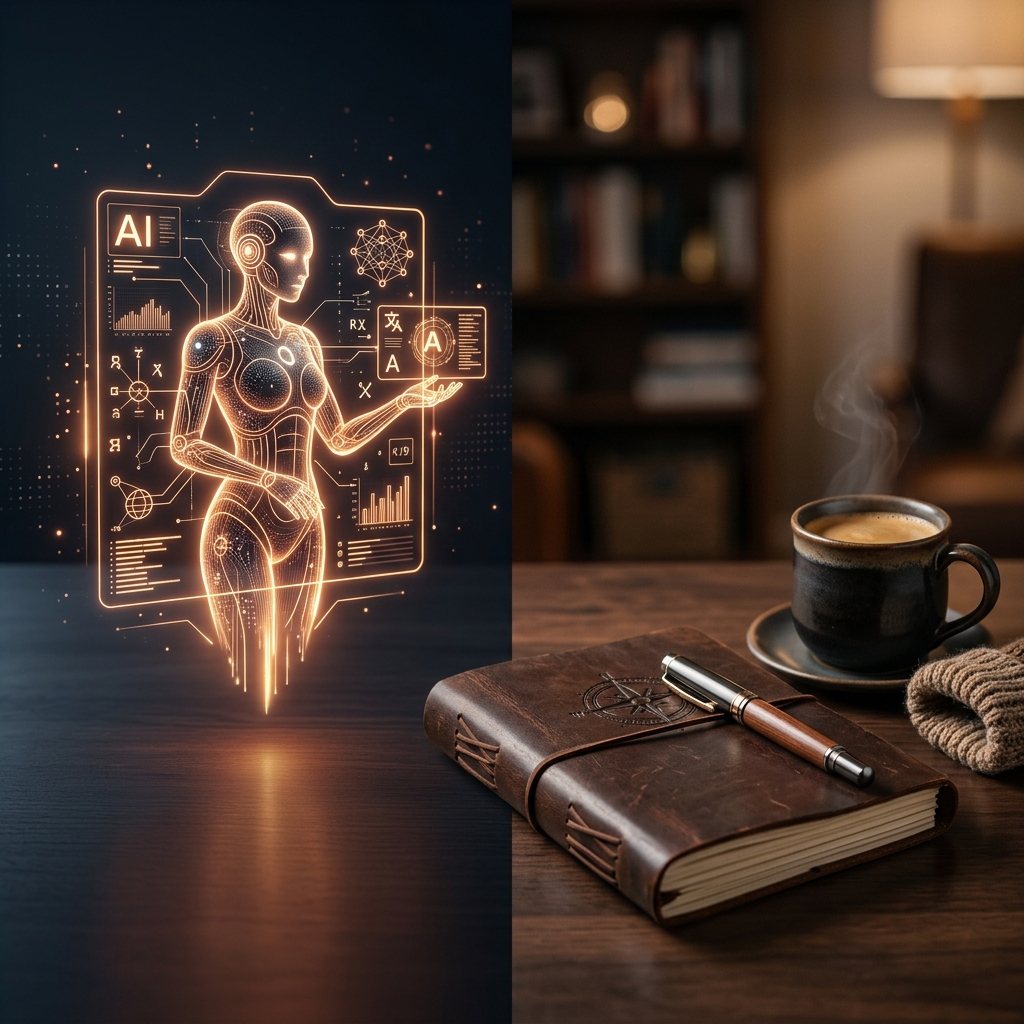
Artificial Intelligence is everywhere. Pronunciation apps analyze our accent in a fraction of a second, and ChatGPT can endlessly simulate conversations about weather, business, or quantum physics. All of this is stress-free, requires no booking, and is—often—completely free of charge.
It might seem that the language teaching profession is about to become obsolete. But is it?
As a coach, I look at this revolution from up close. AI is a brilliant tool, but if you rely exclusively on it for your learning, you risk getting stuck at the eternal intermediate level.
Here is why artificial intelligence is a great assistant but a terrible sole teacher—and why you still need a human to truly start speaking.
What is AI Absolutely Brilliant at? (Let's Be Honest)
I am not going to pretend that AI does not work. I recommend using technology between our coaching sessions to all my students. Tools like ChatGPT or Claude are great for:
- Overcoming Initial Resistance: Talking to a bot does not trigger stress. Nobody is judging you, which helps people with a severe language barrier get used to writing or speaking.
- Instant Text Correction: You can paste your professional email there and ask for error correction along with suggestions for more natural phrasing.
- Generating Exercises: If you need to practice the Present Perfect tense, AI will generate 20 fill-in-the-blank sentences for you in a second.
Sounds great? Yes, but that is only half the battle. True learning begins where algorithms meet their limits.
What Can AI Never Give You? (And Why You'll Get Stuck Without a Human)
AI does not learn language like a human and cannot pass it on that way. Here are four barriers a machine cannot cross:
1. The Illusion of Breaking the Language Barrier
The biggest myth of learning with AI is: “I am speaking to a voice bot, so I am practicing speaking.”
In reality, you are practicing speaking to a phone. Your brain knows perfectly well that there is no living human on the other side. You do not feel social pressure, you do not have to read non-verbal cues from a face, there is no element of improvisation, and no stress that accompanies us in real life.
When you stand face-to-face with a foreigner in a business meeting or during a trip, ChatGPT won't save you or force you to improvise on the spot. Fluency in human relations is built exclusively through conversations with humans.
2. Lack of Empathy and Psychological Personalization
AI cannot see when your shoulders tense up from stress. It does not hear the micro-hesitations in your voice that say, “I understand the rule, but I am afraid to use it.” A good teacher is 50% psychologist and mentor. They know when to let go of grammar and just talk about your tough day at work, and when to gently push you outside your comfort zone. AI can only analyze text and generate the statistically most probable response.
3. The Trap of "Hallucinations" and Lack of Verification
AI can sound incredibly convincing, even when it is completely wrong. Algorithms often accept students' incorrect structures, deeming them "understandable enough," or conversely, correct perfectly valid but less common expressions. Without a teacher's experienced eye, it is easy to internalize errors—so-called fossilized language errors—which are then incredibly difficult to get rid of.
4. No Accountability
You can close a mobile app with a single click as soon as you feel tired or bored. ChatGPT won't ask you at the beginning of the week: “So, how did it go with that article you were supposed to read?”. The factor of human commitment, the relationship with a mentor, and mutual trust are still the strongest motivators for regular work.
The Hybrid Formula: How to Get 100% Out of Your Learning?
The best students do not choose between AI and a human. They combine both.
Think of learning English like working out at the gym. AI represents the workout machines and dumbbells—excellent equipment that you can use on your own in your free time. But it is the personal trainer who designs your program, corrects your form to prevent injuries, and motivates you to do that last, most important repetition.
- Use AI for: daily micro-practice, flashcards, checking single words, and editing simple texts.
- Work with a teacher on: breaking the real speaking barrier, strategically removing your biggest language blocks, dynamic conversation, and tailoring the language to your unique personality and professional goals.
If you want to smartly combine modern technology with individual guidance from a living mentor—without stress, at your own pace, and with the guarantee that you are headed in the right direction—I invite you to join my individual coaching sessions. Let's create a personalized plan to develop your English!
You might also be interested in:
How to Say It in English? Top 20 B2/C1 Phrases (and Translation Traps to Avoid)
Looking for natural English equivalents of common Polish expressions? Discover 20 essential B2/C1 phrases to eliminate Polglish at work and in daily conversations.
How to Translate 'Załatwić' into English? 6 Natural Phrases for Every Situation
The Polish word 'załatwić' is a versatile catch-all. Learn how to naturally say 'I'll take care of it' or 'sorted out' in business and daily conversations.